
Precision CNC Components for Vacuum Equipment
AMS Engineering Vietnam manufactures custom machined parts for vacuum systems, including chambers, flanges, fittings, housings and sealing interfaces—with attention to surface condition, concentricity, cleanliness and repeatable assembly.
Machining Critical Interfaces for Vacuum Systems
Vacuum components require controlled relationships between sealing faces, bores, ports and threaded connections. Our engineering team reviews drawings around leak-sensitive geometry, material behavior, deburring and post-machining handling.
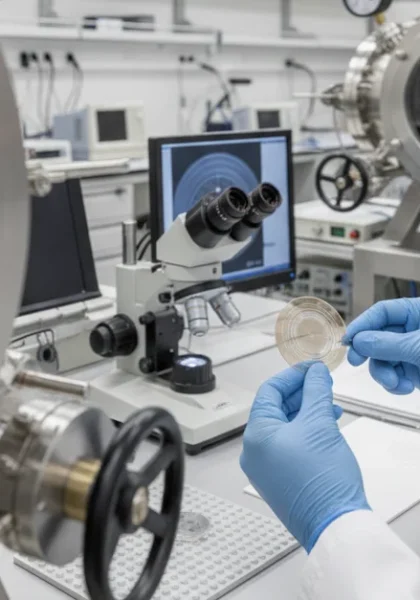
Drawing-Based Parts for Vacuum Equipment
AMS supports custom parts rather than limiting customers to a fixed catalog. Materials, dimensions and inspection requirements follow each application.
Vacuum Chambers & Housings
Milled and turned bodies with ports, mounting features and controlled interfaces.
Flanges & Sealing Faces
Custom flanges with bolt patterns, grooves and machined mating surfaces.
Fittings & Adapters
Turned connections with threads, seats, shoulders and concentric geometry.
Feedthrough Mounts
Precision interfaces for sensors, electrical connections and instrumentation.
Valve & Pump Components
Housings, seats, covers and internal components manufactured to drawings.
Custom Precision Parts
Milled and turned components for laboratory, semiconductor and industrial vacuum systems.
Details That Influence Vacuum Performance
Manufacturing decisions are guided by sealing, alignment, material compatibility and cleanliness requirements.
Sealing Surfaces
Flatness, finish and groove geometry are considered for gasket and O-ring interfaces.
Concentricity & Alignment
Bores, shoulders and flange features are planned around functional axes and datums.
Burr & Particle Control
Edges, cross holes and internal passages are reviewed to reduce contamination risk.
Material & Finish
Machining is coordinated with stainless steel, aluminum, plating, anodizing or passivation requirements.
From Technical Review to Repeat Production
Drawing Review
Evaluate geometry, tolerances, material, finishing and expected volume.
Process Planning
Define datums, setups, tooling and inspection checkpoints.
Sample Validation
Machine initial parts and document agreed critical characteristics.
Stable Production
Standardize the approved process for repeat orders and delivery planning.
Inspection for Vacuum-Critical Features
Measurement methods are selected according to drawing tolerances and the functional importance of each sealing or assembly interface.
Vacuum Component Machining in Vietnam
What vacuum components can AMS manufacture?
AMS manufactures chambers, housings, flanges, fittings, adapters, feedthrough mounts and other custom CNC parts based on customer drawings.
Which materials are commonly used?
Typical materials include stainless steel, aluminum alloys, carbon steels, brass and engineering plastics when specified.
How are sealing surfaces controlled?
Process planning considers datums, flatness, finish, groove geometry and handling. Inspection follows the critical requirements shown on the drawing.
Can AMS support international vacuum-equipment companies?
Yes. AMS supports global customers with English technical communication, scalable production, inspection documentation and export packaging.
Discuss Your Vacuum Equipment Project
Share drawings, target materials, surface requirements and expected quantities. Our engineering team will review manufacturability and prepare practical next steps.