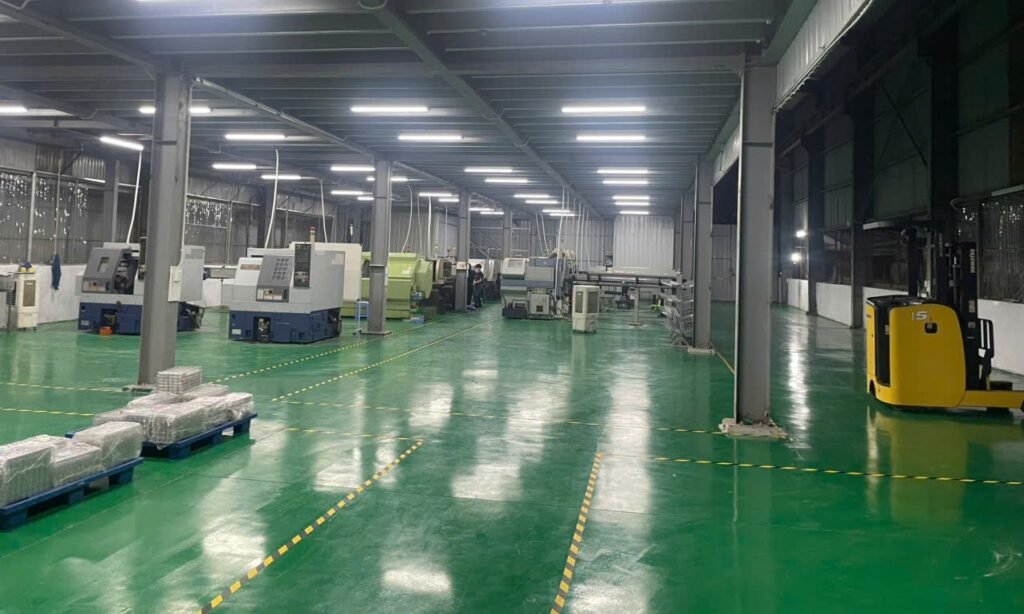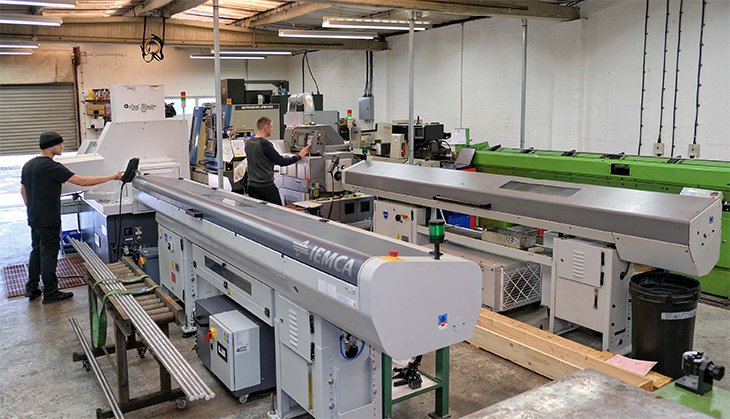
CNC Turning in Vietnam is a practical sourcing option for shafts, bushings, pins, threaded bodies, and other rotational parts. Turning is efficient because the workpiece rotates while cutting tools remove material, allowing a supplier to produce concentric diameters, grooves, threads, bores, and profiles in a controlled sequence. For overseas buyers, the strongest results come from a clear drawing, suitable material choice, and a supplier review that matches tolerances and inspection to the actual function of the part.
Identify the critical diameters and fits
Most turned components work with another part: a bearing, seal, gear, housing, or mating shaft. Mark the diameters that control that relationship and state the required fit. A journal that carries a bearing may require a tighter tolerance and a more controlled surface finish than a non-functional shoulder. Apply general tolerances to secondary dimensions so the whole part is not quoted as a precision component unnecessarily.
Concentricity is usually achieved naturally when features are machined in one setup, but it becomes harder when a part must be removed, reversed, or transferred to another process. Tell the supplier which features need to run true to each other. That lets the programmer plan the workholding and inspection method before production begins.
Design shafts and bushings for stable machining
Long, slender shafts can deflect when they are turned. Their design may need a centre hole, a support location, or a different process sequence using a tailstock or steady rest. Avoid abrupt changes between large and small diameters where a smooth radius would improve strength and tool movement. For bushings, show the bore requirement, wall thickness, flange geometry, and any lubrication grooves. A practical machining review can spot thin-wall distortion or difficult clamping before material is cut.
When a part has milled flats, cross holes, keyways, or slots, it may be completed on a mill-turn machine or transferred to a machining centre after turning. Supplying a 3D model in addition to the drawing helps the manufacturing team choose the most stable route.
Specify threads with complete information
Thread callouts should include standard, size, pitch, class where relevant, and usable thread depth. For example, “M12 x 1.25” is more useful than simply “M12” when a fine pitch is required. Internal threads also need a realistic bottom condition: a blind hole requires drill depth beyond the usable thread because taps and thread mills have lead-in geometry. External threads need a relief or runout location if another feature sits close to the thread.
For CNC Turning in Vietnam, include information about mating components when sealing, preload, or repeated assembly is important. This gives the supplier a chance to recommend gauges, deburring, plating allowances, or a small lead-in chamfer that makes assembly more reliable.
Select materials and finishes for the environment
Steel, stainless steel, aluminium, brass, and engineering plastics can all be turned, yet they call for different tools, feeds, and finishing strategies. Carbon steel is economical for many shafts but may need plating or black oxide in corrosive environments. Stainless steel offers corrosion resistance but can require more controlled machining. Brass is useful for fittings and electrical parts, while aluminium reduces weight.
Surface finish should be tied to function. A sealing or bearing surface often needs a controlled roughness, while a non-contact outside diameter may only need a standard machined finish. If plating, anodizing, or heat treatment is planned, note it on the drawing because each process can affect final dimensions.
Prepare an RFQ that avoids delays
Include a PDF drawing, 3D model, material and grade, quantity, finish, target delivery, and inspection expectations. State whether the part is a prototype, a low-volume batch, or a recurring item. Clear RFQ information reduces unnecessary revisions and allows a more accurate quote.
AMS Engineering Vietnam supports CNC Turning in Vietnam for international customers who value responsive communication, manufacturability feedback, and dependable production. A short design review before order release is the fastest way to protect fit, function, and total cost.
Related Categories: CNC Manufacturing